
So, you want to know about the world’s hottest hot sauce? It’s a wild ride. The top spot is a brutal battle, usually fought with pure capsaicin extracts that clock in at a mind-numbing 16 million Scoville Heat Units (SHU).
Let’s be clear: these aren’t really sauces. They’re more like chemical weapons in a bottle, a whole different beast from the flavorful heat we actually want to eat. For cookers and restaurants, especially new brands in the USA market, actionable insight is key: focus on sauces that build a following, not just a one-time dare.
Ranking the World’s Hottest Hot Sauce Contenders
When you dive into the world of extreme heat, you quickly realize there are two separate universes: sauces made for viral videos and sauces made for dinner. Chasing the title of “world’s hottest” has led to some truly insane creations, but they aren’t what you’d put on your menu if you want happy, repeat customers. This is crucial information for cookers and restaurants aiming for more traffic.
This chart gives you a bird’s-eye view of the heat hierarchy, from the friendly stuff all the way up to the face-melters.
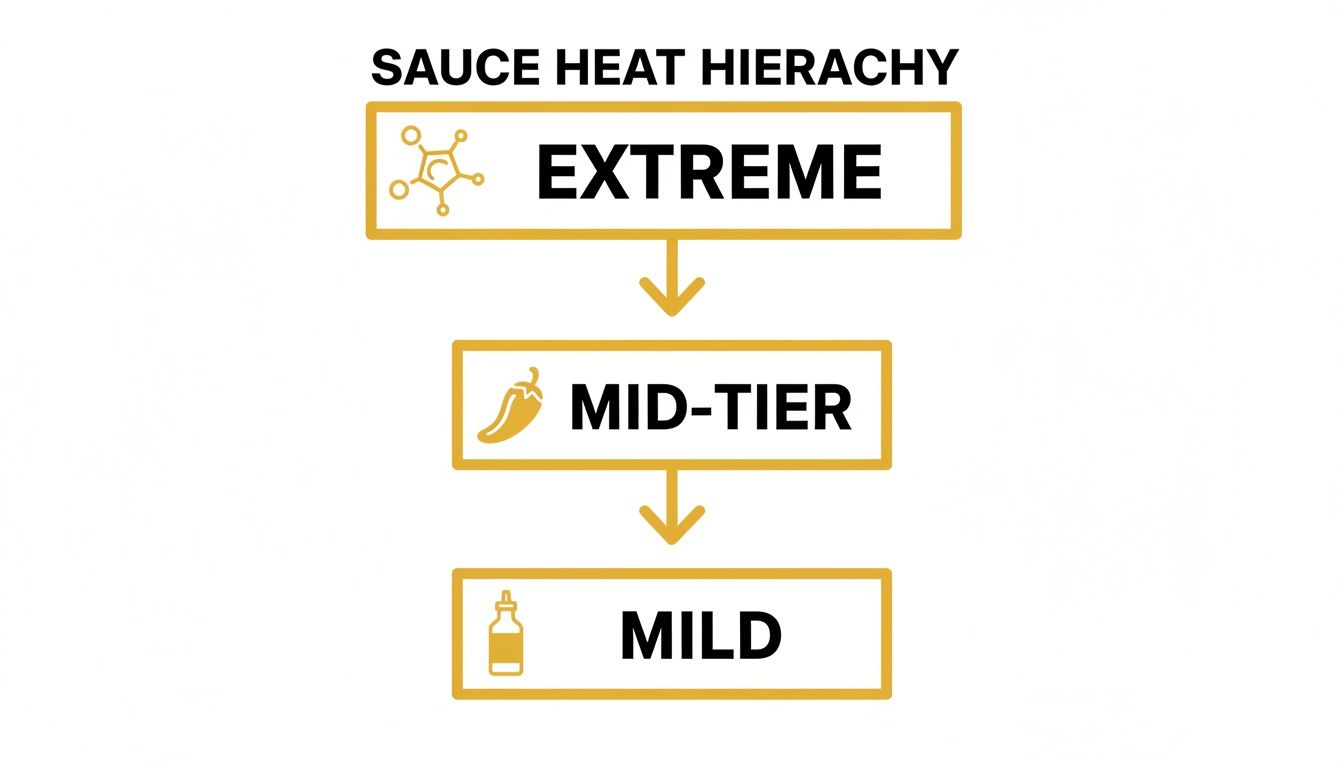
As you can see, those extreme “sauces” are playing a completely different sport. They’re worlds away from the mid-tier and mild sauces that make up the backbone of any great Wing Sauces menu.
To really grasp the massive difference in heat, it helps to see the numbers side-by-side.
Hot Sauce Heat Comparison From Mild to Extreme
| Sauce Type | Example | Scoville Heat Units (SHU) |
|---|---|---|
| Mild Sauce | Frank’s RedHot | 450 SHU |
| Medium Hot Sauce | Tabasco Original | 2,500 – 5,000 SHU |
| Habanero Sauce | Typical Habanero Sauce | 100,000 – 350,000 SHU |
| Superhot Pepper Sauce | Ghost Pepper Sauce | ~1,000,000 SHU |
| Extreme Extract | Blair’s 16 Million Reserve | 16,000,000 SHU |
Seeing it laid out like this really puts things in perspective, doesn’t it? The jump from a kitchen staple to a chemical extract is absolutely staggering.
From Kitchen Staple to Chemical Extreme
The climb in hot sauce heat has been nothing short of dramatic. Your classic Buffalo Wing Sauces often start with something like Frank’s RedHot, which sits at a friendly 450 SHU. Now, compare that to a collector’s item like Blair’s 16 Million Reserve, which hits an unbelievable 16,000,000 SHU.
That’s over 35,000 times hotter.
This huge leap splits the market in two. On one side, you have the sauces we all know and love—the ones built for flavor. On the other, you have ultra-hot concentrates sold for the shock factor. And while those get the headlines, they make up less than 1% of the market.
For kitchens in places like California, Arizona, and Texas, the real money is in balanced, delicious Wing Sauces that make a chicken wings recipe sing, not scream.
A Smarter Plan for Your Menu
So what does this all mean for a restaurant owner or home cooker? Simple. Don’t get caught up in the hype.
Instead of chasing the temporary buzz of a ridiculously hot sauce, focus on building a killer lineup of the best wings sauces that deliver on both flavor and a satisfying, manageable heat. That’s how you build a loyal following and get more traffic.
In competitive markets like California, Arizona, and Texas, the smartest play is offering a range of expertly crafted Wing Sauces. The goal isn’t to have the world’s hottest hot sauce—it’s to have the best wings sauces in Texas or California that people crave and come back for week after week.
This is how your sauce hot wings become famous for being delicious, not just for being a dare. If you’re looking to build out a winning menu, our guide on the best store-bought chicken wing sauce is a great place to start.
Understanding the Science of Extreme Heat
Ever wondered what makes the world’s hottest hot sauce feel like drinking liquid fire? It’s not just about throwing a bunch of peppers into a blender. There’s a real science to it, and for any chef or restaurant owner looking to craft the best wings sauces, understanding this is your secret weapon. It all boils down to one thing: the Scoville Scale.

Simply put, a Scoville Heat Unit (SHU) rating is a measurement of dilution. Imagine this: the number tells you exactly how many drops of sugar water it would take to completely neutralize the heat of one drop of pepper extract. A humble jalapeño sits around 5,000 SHU, but the infamous Carolina Reaper can torch the scale at 2.2 million SHU.
Peppers Versus Extracts
Now, here’s where things get interesting for your menu. When you’re creating a killer wing sauce, where that heat comes from matters just as much as how hot it is. You’re dealing with two totally different animals: natural peppers and capsaicin extracts.
Natural Pepper Heat: We’re talking about real peppers—Habaneros, Ghost Peppers, Scorpions. They don’t just bring the burn; they bring character. Some are fruity, others are smoky, and some even have floral notes. This is the magic behind the best wings sauces in California and everywhere else; they use the pepper’s unique flavor to build something unforgettable.
Capsaicin Extract: This is pure, lab-grade heat. It’s a concentrated, purified form of capsaicin, which is the chemical that makes peppers feel hot. It adds a raw, blistering burn with virtually zero flavor. This is how a sauce hot wings challenge can hit an absurd 16 million SHU.
That difference is everything. A sauce that proudly features “Carolina Reaper” is promising a dance between intense fire and complex flavor. A bottle that just screams “16 Million SHU” is selling one thing: pain. To see how a pepper like the habanero can deliver both flavor and a manageable kick, you should check out our guide on what is Mango Habanero sauce.
Actionable Insight For Your Kitchen
So, what does all this science mean for your chicken wings recipe? It means you can now read an ingredient list like a pro and know exactly what you’re serving your customers. This is actionable insight for cookers and restaurants.
For restaurant owners in tough markets like Arizona and Texas, knowing your heat source is a huge advantage. It helps you pick Wing Sauces that balance a thrilling kick with the kind of flavor that builds loyal fans, not just one-time daredevils.
Take a look at the ingredients. If whole peppers are high on the list, you’ve got a culinary sauce on your hands. But if “capsaicin extract” is a main ingredient, you’re holding a novelty item meant for social media stunts. Think about classic Buffalo Wing Sauces—they rely on cayenne pepper to create a balanced heat that plays perfectly with the buttery, tangy base. A great hot sauce recipe always balances flavor and heat.
By focusing on sauces built with natural peppers, you’re building a menu around flavor that people will crave again and again. That’s how you create the best wings sauces in Texas—or anywhere, for that matter. You’re not just selling heat; you’re selling an experience.
The Wild History of the Hot Sauce Arms Race
The race to create the world’s hottest hot sauce was never a friendly competition. It was an all-out arms race, a story packed with intense rivalries, some clever chemistry, and a whole lot of marketing genius that stretched the very definition of “edible.” But for any restaurant owner or serious home cook, it’s a history that holds a critical lesson.
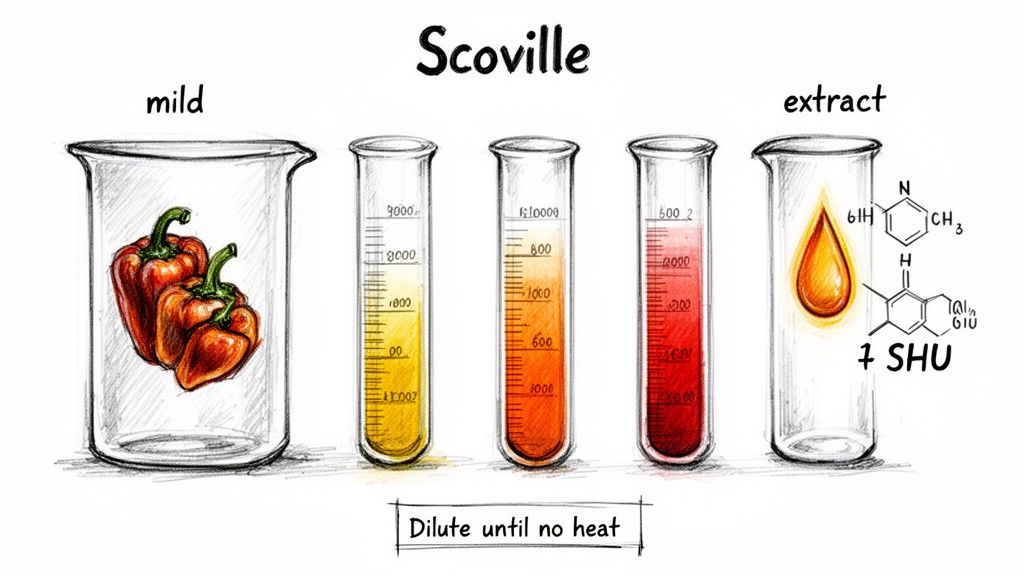
It all kicked off when brands started a game of one-upmanship, shifting from fiery peppers to what was essentially weaponized heat. This chase created a whole market for thrill-seekers, but it split off entirely from the art of making the best wing sauces.
From Peppers to Pure Pain
In the early days, if you wanted real heat, you used habaneros. Then the Ghost Pepper came along and smashed the one-million SHU ceiling, completely changing the game. But the real shift—the moment things went nuclear—was when makers moved from whole peppers to pure capsaicin extracts.
Suddenly, brands like Mad Dog 357 and Blair’s became legends. They weren’t just bottling a wing sauce; they were bottling liquid fire. Their mission wasn’t to complement a chicken wings recipe. It was to create an event.
Here’s the key takeaway for anyone in the food business: the extreme heat market is built on novelty and one-off challenges. The mainstream market, where your loyal customers and repeat business live, is built entirely on flavor. Someone might try the “world’s hottest” once for a story, but they’ll come back for delicious Buffalo Wing Sauces every single week.
Getting that difference is everything, especially in a crowded food scene. Finding the best wings sauces in California or Texas isn’t about the highest Scoville rating—it’s about finding the one people can’t stop craving.
The Record-Breaking Rivalries
This ruthless drive to claim the “world’s hottest” title left a wild timeline of escalating heat. As sauce-making tech got better, new kings were crowned. Brands like Pure Evil and Blair’s pushed things to the absolute edge, with Blair’s hitting a mind-boggling 16,000,000 SHUs using pure capsaicin crystals.
The game was no longer about finding the hottest pepper, like the Carolina Reaper. It became about isolating the chemical that delivers the heat. This saga is a masterclass in how a niche category can generate huge media hype while being a tiny slice of the market. For a deeper dive into this timeline, Heat Hot Sauce’s blog has a great breakdown.
What This Means for Your Menu
The lesson from the hot sauce arms race is simple: chasing five-alarm fire is a marketing stunt, not a food strategy. The brands that broke records sold collector’s items and got a lot of press, but they didn’t make the sauces that restaurants in Arizona, Texas, and California count on day in and day out.
The sauces that actually win over customers are the ones that balance their heat with incredible, complex flavors. Think about the tangy kick a perfect sauce hot wings needs, or a smoky chipotle BBQ that keeps people coming back for more. Those are the workhorses of a killer menu.
If you’re looking for ideas on building that flavor-first heat, our guide on crafting a great hot chicken wing sauce gives you practical, real-world advice. The real win isn’t having the hottest sauce in town; it’s having the best wings sauces in Texas that keep your tables packed.
How to Use Extreme Sauces Safely and Effectively
Let’s get one thing straight: handling the world’s hottest hot sauce is not like dousing your wings in your favorite table sauce. These are serious, multi-million Scoville products. They’re chemical-grade additives, not finishing sauces. For anyone in the kitchen—pro or home cook—especially when you’re trying to nail your sauce hot wings, knowing the safety rules isn’t just a good idea. It’s mandatory.
These aren’t your everyday Wing Sauces. They are pure, concentrated heat. Treating them with anything less than total respect is a recipe for pure pain. Think of it less like cooking and more like handling hazardous materials in a lab.
Non-Negotiable Safety Protocols
Before you even think about cracking the seal on a bottle of high-octane extract, you need to gear up. These aren’t suggestions. They are the absolute rules of engagement to protect yourself, your kitchen crew, and your customers.
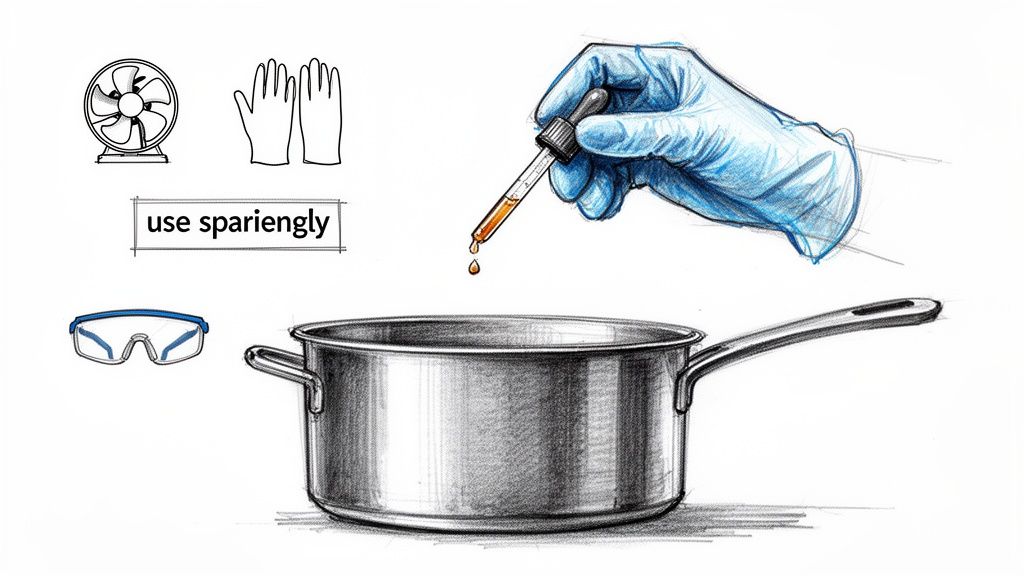
Always Wear Protective Gear: Nitrile gloves are a must. The capsaicin in these extracts is no joke and can cause nasty chemical burns on your skin. We also strongly recommend safety goggles to stop any stray splash from hitting your eyes.
Ensure Proper Ventilation: When capsaicin gets hot, it goes airborne. In a packed kitchen, that can create a choking, pepper-spray-like cloud that’s going to ruin everyone’s day. Always work in a well-ventilated space, ideally right under a powerful commercial hood.
Start with Microscopic Amounts: You are not adding a “dash” of this stuff. You’re using a toothpick or a clean pipette to add a minuscule, measured amount. A single drop can take a gallon of base sauce from zero to inferno.
The cardinal rule for extreme sauces is to treat them as a potent ingredient, not a condiment. One careless drop can torch an entire batch, costing you time and money, or worse, cause serious harm. This is a critical piece of actionable insight for all cookers and restaurants.
The Right Way to Add Extreme Heat
So, how do you actually use this stuff in the real world? The idea is to jack up the heat in a large batch of a base sauce—like your house Buffalo Wing Sauces—without messing with the flavor you worked so hard to create. This is purely about cranking up the Scovilles, not adding taste.
Here’s the play-by-play for adding extreme heat without blowing up your kitchen:
- Prepare Your Base: Start with a big batch of your go-to wing sauce. We’re talking a five-gallon bucket of your signature BBQ, buffalo, or whatever you’ve got.
- Gear Up: Gloves on. Goggles on. Make sure that ventilation hood is running on full blast.
- Introduce the Heat: Grab a clean toothpick and dip just the very tip into the extract. You want the absolute smallest amount possible.
- Incorporate Thoroughly: Stir that toothpick into your sauce. And I mean stir. Mix it vigorously for several minutes to get that heat evenly distributed.
- Test and Adjust Carefully: After a good mix, let the sauce rest for a few minutes. Then, using a clean utensil, take a tiny taste to check the heat. If you need more fire, repeat the whole process with a fresh toothpick. Never, ever double-dip.
Following this method lets you create a true challenge wing that still tastes incredible, delivering on the flavor your customers expect from the best wing sauces. And when you’re thinking about creating more balanced flavors, exploring ideas like a habanero honey mustard can give you some great inspiration for the milder, more flavor-forward side of your menu.
Finding Wing Sauces That Prioritize Flavor Over Fire
Let’s be honest. Chasing the world’s hottest hot sauce might get you a few clicks online, but it won’t build a line of customers out your door. For restaurant owners and serious home cooks, the real goal is finding those unforgettable Wing Sauces that people talk about for weeks. This is where the art of balance becomes your secret weapon.
Think about the sauces that have become legends—from a timeless Buffalo Wing Sauce to a killer Mango Habanero. They’re famous for their harmony. They bring together tang, sweetness, and savory notes with a heat that’s satisfying, not punishing. It’s that complexity, not brute force, that separates a good wing sauce from a great one.
Building a Winning Menu with Tiers of Heat
You don’t have to guess how to do this. A proven strategy is to think about your heat levels in tiers. Just look at the popular show Hot Ones. They don’t throw their guests straight into the fire; they build a ladder of heat, showcasing a whole world of flavor along the way up.
This tiered approach is a brilliant model for any menu. When you offer a range of heat, you give everyone a seat at the table—from the spice-shy newcomer to the seasoned chilihead looking for a thrill. Everyone can find a sauce hot wings option they’ll actually love.
A smart menu might look something like this:
- The Classics: Your gateway sauces, like a smoky BBQ or a sweet Teriyaki. Zero intimidation, all flavor.
- The Crowd-Pleasers: This is your signature Buffalo Wing Sauces and other mid-range workhorses. The perfect middle ground.
- The Adventurous: A habanero-based sauce that delivers a real kick but still lets the flavor shine through.
This isn’t just about making people happy; it’s the key to crafting the best wings sauces in California and beyond. It’s about delivering an experience that makes people want to come back.
The Sweet Spot Where Heat Meets Flavor
If you look at what customers actually buy, the picture becomes crystal clear. While the hype machine pushes million-SHU extracts, the vast majority of people are eating something much tamer. The Hot Ones lineup itself is a great guide. Their Season 13 slate, for instance, started at a gentle 1,700 SHU and mostly capped out around 118,000 SHU for the main event.
The market data backs this up completely. A massive 65-70% of hot sauce fans stick to sauces under 50,000 SHUs. Another 25-30% venture into the 50,000-500,000 SHU range. That leaves a tiny sliver—less than 5%—chasing the dragon with sauces over a million SHUs. If you want to dive deeper into these lineups, you can explore a complete list of sauces from the show.
This is where the rubber meets the road. The most successful Wing Sauces almost always land between 2,000-50,000 SHUs. That’s the sweet spot that delivers a satisfying burn for heat lovers while still being delicious enough for everyone else. This is the range where you find the best wing sauces that build a loyal following.
For anyone running a food business in competitive spots like Arizona or Texas, this data is gold. Sustainable revenue comes from repeat business, and repeat business is built on flavor, not fire. A viral heat challenge is a one-time trick; customer loyalty is earned. This is actionable insight for cookers.
So, instead of chasing a gimmick that alienates most of your customers, focus on perfecting a great hot sauce recipe or finding a supplier who understands balance. That’s how you build a reputation for the best wings sauces in Texas. Your perfectly cooked chicken wings recipe deserves a sauce that makes it sing, not one that numbs the palate into submission. When you put flavor first, you’re not just selling wings—you’re building a legacy.
Putting the Heat to Work on Your Wing Menu
So, all this talk about the world’s hottest hot sauce is interesting, but how do you actually make money from it? If you’re running a restaurant, especially in a wing-obsessed market like California, Arizona, or Texas, you know the competition is stiff. It’s about more than just novelty; it’s about smart business.
Let’s be real: the true opportunity isn’t about inflicting pain with a million-Scoville sauce. It’s about building a craveable, profitable menu. The goal is to create a lineup of the best wing sauces that has something for everyone—from the person who just wants a great meal to the chilihead looking for a thrill. Here’s how you do it right.
Build a Wing Sauce Menu in Tiers
Throwing a random list of sauces on your menu is a surefire way to confuse customers and miss out on sales. The best wing spots guide their guests up a “ladder of spice,” making it easy for them to find their perfect heat level and maybe even encouraging them to be a little adventurous.
Think about organizing your Wing Sauces this way:
- Tier 1 (The Crowd-Pleasers): This is your foundation. We’re talking about the essentials: a classic Buffalo Wing Sauce, a smoky and sweet BBQ, maybe a savory Teriyaki. These are the workhorses of your menu, the flavors that will satisfy the vast majority of your customers.
- Tier 2 (The Adventurous Kick): Here’s where you start to turn up the heat. A well-made Mango Habanero or a zesty Chipotle BBQ belongs in this tier. These sauces bring a noticeable kick but always keep the flavor front and center. This is that 2,000-50,000 SHU sweet spot where most of your heat-seeking customers will happily land.
- Tier 3 (The Expert Level): This tier is reserved for the true spice fanatics. A Ghost Pepper or Scorpion pepper sauce can live here, offering a serious burn that still carries a distinct, delicious flavor. It shows you’re serious about heat, but you’re not sacrificing taste for a gimmick.
A tiered menu like this practically guarantees you have the best wings sauces in California and Texas for every single person who walks through your door, which is what keeps them coming back.
Run a “Hot Wing Challenge” That People Actually Enjoy
A wing challenge can be an incredible marketing tool, but you have to be smart about it. The goal is to generate buzz, not send people to the emergency room. Forget about slathering wings in pure, flavorless extract. That’s a rookie mistake.
Actionable Insight: The pro move is to take a gallon of your most popular house wing sauce—your buffalo or BBQ—and carefully add a tiny, measured amount of a high-SHU extract. You’ll need gloves and eye protection, of course. This creates a “supercharged” version of a flavor your customers already know and love.
Brand it as a limited-time offer, get a waiver signed, and have milk and ice cream on standby. This turns the challenge into a fun, shareable event instead of a dangerous dare, and it protects your reputation.
Your Menu Descriptions Are Your Best Salesperson
Your menu is the first and last thing a customer reads. Don’t just write “Hot.” Sell the experience. Instead of a one-word description, try something like: “A fiery habanero burn balanced with sweet tropical fruit and a hint of citrus.” That tells a story and highlights the craft behind your sauce hot wings.
In a busy kitchen, consistency is everything. Using high-quality, professionally made sauces from a partner like Mr. Wings saves you precious time and labor. More importantly, it guarantees the best wings sauces in Texas taste exactly the same every single time an order goes out. That reliability is what builds trust, loyalty, and a scalable chicken wings recipe.
When you focus on a balanced menu that puts flavor first, you stop chasing the gimmick of the world’s hottest hot sauce. Instead, you start building a reputation for having the absolute best, most addictive wings in town. And that’s what turns a simple menu item into a true signature that drives your business forward. For more ideas, check out our guide on what truly makes the best wing sauce.
Your Hot Sauce Questions, Answered
Let’s cut through the noise and tackle some of the most common questions we hear from restaurant owners and serious home cooks. We’re here to clear things up, especially when it comes to a simple truth: for a successful menu, flavor will always beat out pure, punishing heat. This is the actionable insight cookers need.
What’s the Difference Between a Hot Sauce and an Extract?
This is a big one, and it’s all about intent. A real hot sauce recipe is food. It’s crafted from peppers, vinegar, salt, and spices with one goal: to create a delicious flavor experience. Think of your classic Buffalo Wing Sauces—they’re all about that tangy, buttery taste, with heat as a supporting character.
An extract, on the other hand, is a chemical. It’s pure, concentrated capsaicin, designed as an additive for one reason only: to add scorching, often tasteless heat. It’s the difference between using fresh garlic for its rich flavor versus adding a drop of a lab-made chemical for pure pungency. One is cooking, the other is chemistry.
Can I Get in Trouble for Serving Super-Hot Sauces?
You absolutely can. There’s a reason you see places with multi-million SHU “challenge” wings making customers sign a liability waiver. It’s not just for show. These products are no joke and can lead to real physical distress, from excruciating pain and vomiting to, in some scary cases, a trip to the hospital.
Before you even think about putting a waiver-worthy sauce on your menu, talk to a lawyer. You need to understand your liability and what local health codes say. It’s about protecting your business, your team, and your guests.
For restaurants, knowing what customers love is gold. Promoting your best wing sauces starts with great feedback. Learning How to Write Restaurant Reviews That Drive Bookings can help you turn happy eaters into powerful marketing.
What’s the Best Heat Level for a Popular Wing Menu?
For the overwhelming majority of your customers—the ones who come back week after week—the money is in the 2,000 to 50,000 SHU range. This is the sweet spot. It delivers a satisfying kick that spice fans crave without blowing out their palate, letting the flavor of your wing sauce be the hero.
This range gives you so much room to play with your Wing Sauces. You can build an incredible chicken wings recipe where every smoky, sweet, or tangy note comes through loud and clear. Sure, you can have a “dangerously hot” option around 100,000 SHUs for the thrill-seekers, but your bread and butter will always be flavor.
It’s the strategy that builds legendary wing spots, whether you’re making the best wings sauces in California or Texas. Taste brings people back, not pain.
How Can I Run a ‘Wing Challenge’ for Marketing?
A wing challenge can generate a ton of buzz if you do it right. Think of it as a special event for social media shares, not a regular menu item.
Here’s a smart way to approach it:
- Start With Flavor: Pick one of your most popular Wing Sauces to use as the foundation.
- Heat It Up (Safely): In a well-ventilated area and wearing gloves, mix in a tiny, carefully measured amount of a high-SHU extract to make an ultra-hot batch.
- Make It an Event: Bill it as a limited-time challenge. Create hype around it.
- Prioritize Safety: Use a liability waiver, no exceptions. Have milk, ice cream, or bread on standby to help cool the fire.
This approach keeps it fun and controlled, making sure your restaurant is famous for amazing sauce hot wings, not for being a dare that ends badly.
Ready to build a menu that nails that perfect balance of unforgettable flavor and satisfying heat? Mr. Wings has a full lineup of market-proven sauces built for restaurant success. Find your next signature flavor at https://usa.mrwings.com.